Help us make a difference in your community by making a tax deductible donation to the fire department.
2026 Responses
Month
Fire
EMS
Jan
38
Feb
30
Mar
38
Apr
39
May
40
Jun
Jul
Aug
Sep
Oct
Nov
Dec
Total
185
0
2025 Responses
Month
Fire
EMS
Jan
32
234
Feb
20
180
Mar
23
190
Apr
28
202
May
28
182
Jun
31
196
Jul
45
217
Aug
26
187
Sep
22
218
Oct
25
215
Nov
31
217
Dec
32
194
Total
343
2432
Past Responses
Year
Fire
EMS
2012
334
2587
2013
321
2613
2014
322
2721
2015
349
2653
2016
341
2483
2017
456
2503
2018
570
2358
2019
339
2302
2020
341
1804
2021
327
1919
2022
315
2140
2023
396
2149
2024
367
2293
Web Counters
Website Visitors Since January 17, 2014
2,714,644
Visitors Today
Jun 27, 2026
1,019
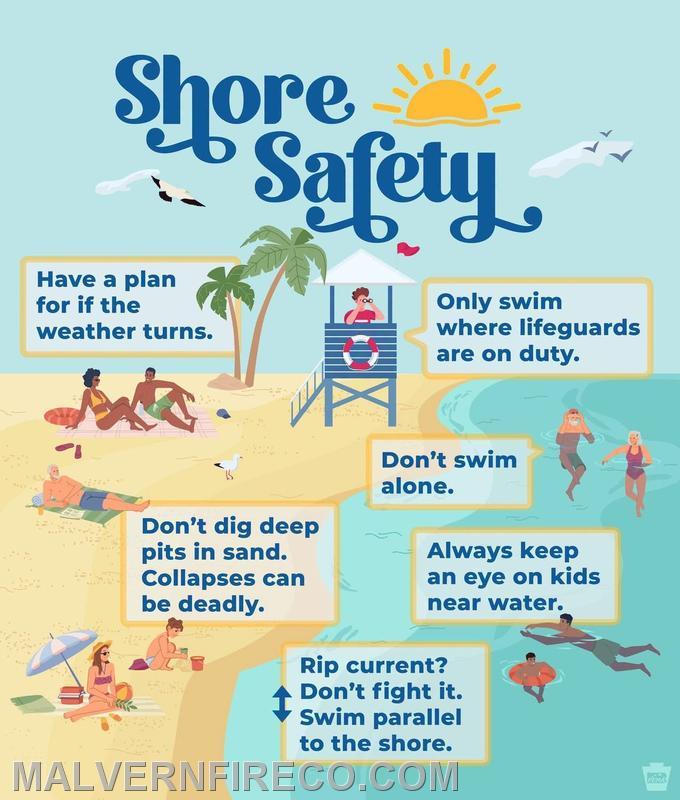
Safety Down the Shore!
By Watch Desk
June 27, 2026
Swim only when lifeguards are actively on duty, and remain within areas designated and marked as safe. If caught in a rip current moving out to sea, stay calm. Do not try to fight the current. Float or tread water, then swim parallel to the shoreline until you are out of the pull. To prevent serious spinal injuries, always enter the water feet first, especially in shallow or unfamiliar areas. Stay informed about local weather and tides. Leave the beach immediately if you see lightning or hear thunder. Remain alert to shorebreaks and never turn your back to the waves. Unexpected waves or strong surf can knock you down or push you into the hard sand. Protect your skin by using a broad-spectrum, water-resistant sunscreen with at least SPF 30. Reapply every two hours. Drink plenty of water to stay hydrated. Avoid excessive alcohol, which can worsen dehydration in warm temperatures. Take regular breaks in the shade, especially during peak ultraviolet hours, generally from 11 a.m. to 3 p.m. Secure beach umbrellas firmly in the sand. High winds can lift poorly anchored umbrellas and cause injuries. Limit the depth of any holes dug in the sand to no deeper than the knees of the smallest person in your group. Always fill in holes before leaving to prevent falls and injuries.